Amazon Keyspaces Multi-Region Replication
Summary
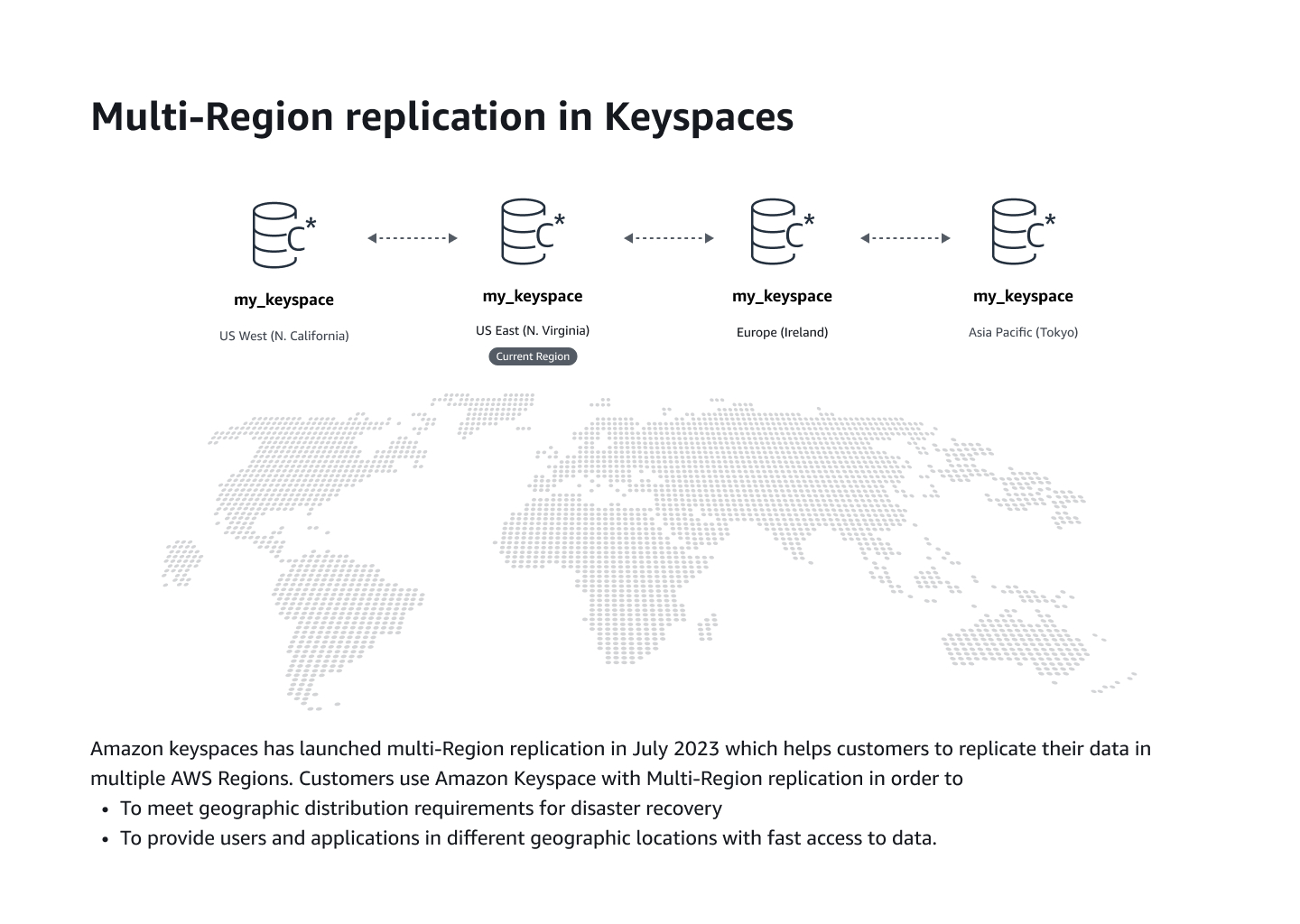
Led the design of Multi-Region Replication for Amazon Keyspaces, enabling customers to replicate their Apache Cassandra workloads across multiple AWS Regions. The project was delivered in two phases - initial launch of multi-region capabilities and subsequent management features for existing keyspaces.
Problem
Customers running large Cassandra deployments faced significant operational overhead:
- Manual management of cross-region replication and data synchronization
- Complex repair operations to maintain data consistency
- No native way to replicate data in Amazon Keyspaces across regions
- Limited disaster recovery and geographic distribution capabilities
This particularly impacted enterprises like Netflix and Capital One who run thousands of Cassandra nodes across multiple data centers.
Target Customers
- Enterprise developers managing large-scale Cassandra deployments (100s-1000s of nodes)
- Organizations requiring geographic data distribution
- Companies with strict disaster recovery requirements
- Existing Cassandra users looking to migrate to managed services
Research showed 50% of Cassandra users require multi-region replication capabilities.
Success Metrics
Adoption
- Percentage of new keyspaces created with multi-region replication
- Adoption rate among existing vs new customers
Task Completion
- Success rate of keyspace creation with multi-region setup
- Success rate of table creation in multi-region keyspaces
- Success rate of region addition/removal operations (Phase 2)
Usability
- Time to complete multi-region keyspace creation
- Time to complete table creation in multi-region setup
- Customer support ticket volume related to replication
- Drop-off rates in creation flows
Solution
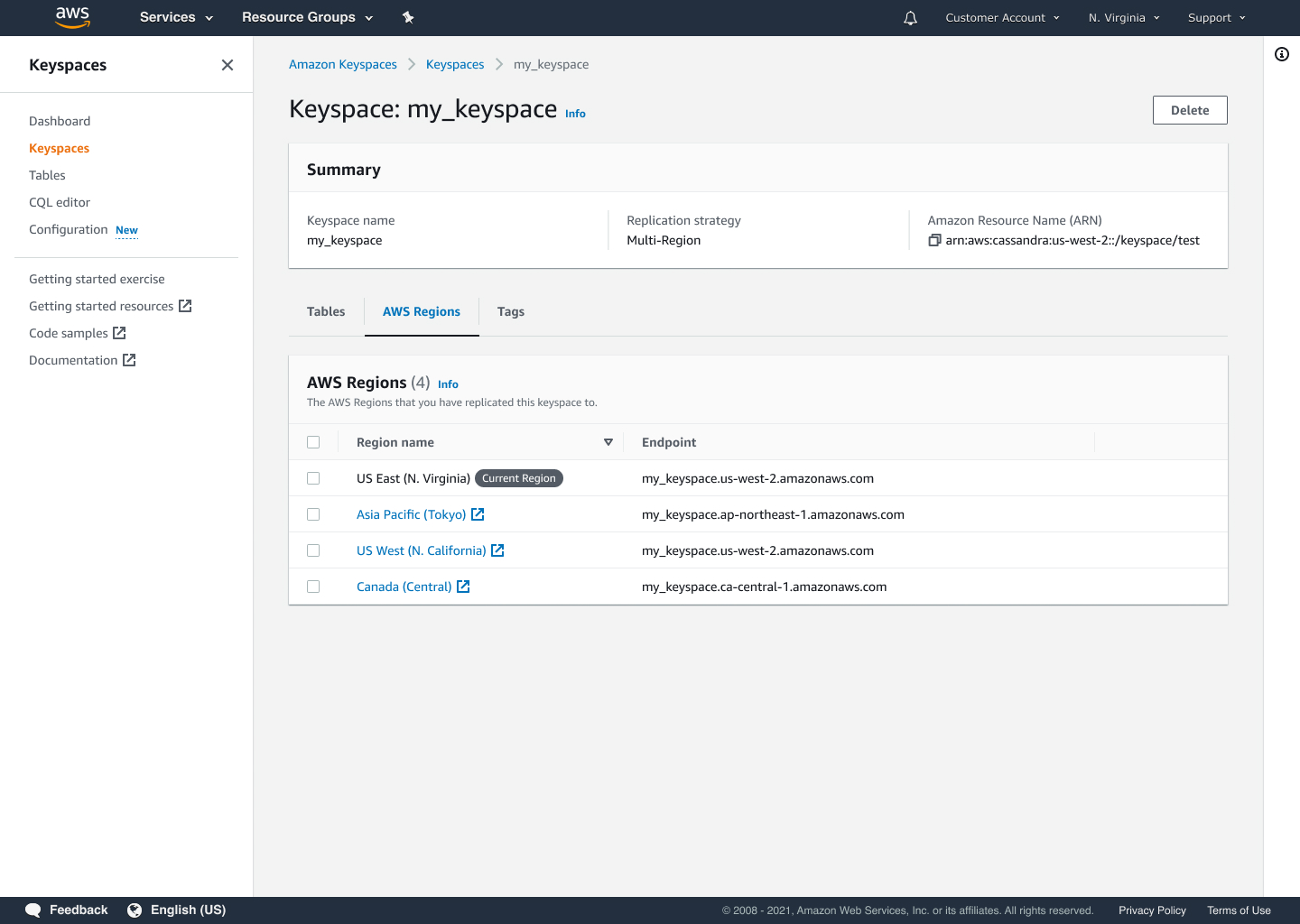
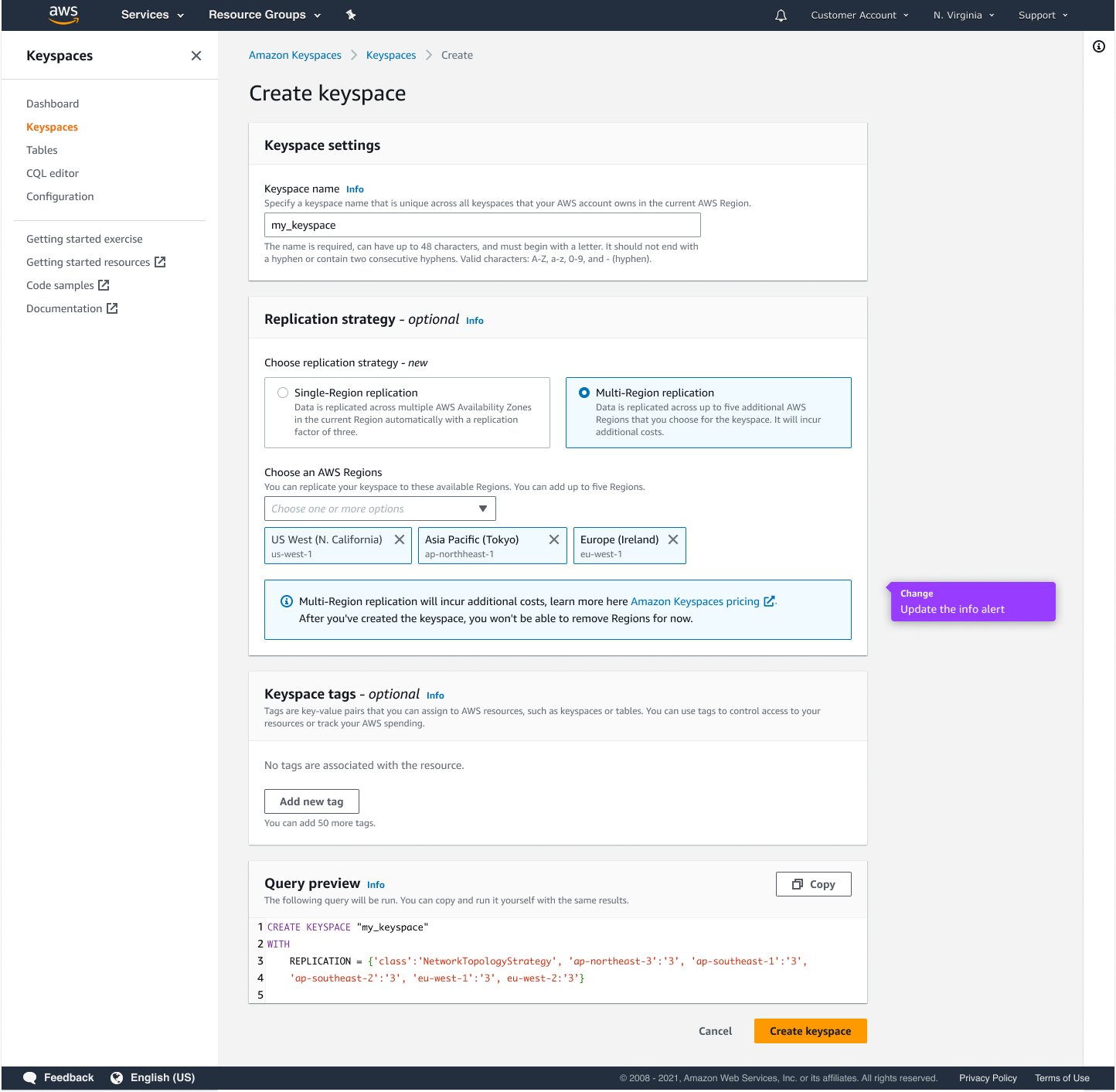
Phase 1: Initial Launch
- Multi-region keyspace creation supporting up to 5 AWS regions
- Automated cross-region replication setup with inherited table strategies
- Comprehensive monitoring with replication latency metrics and status tracking
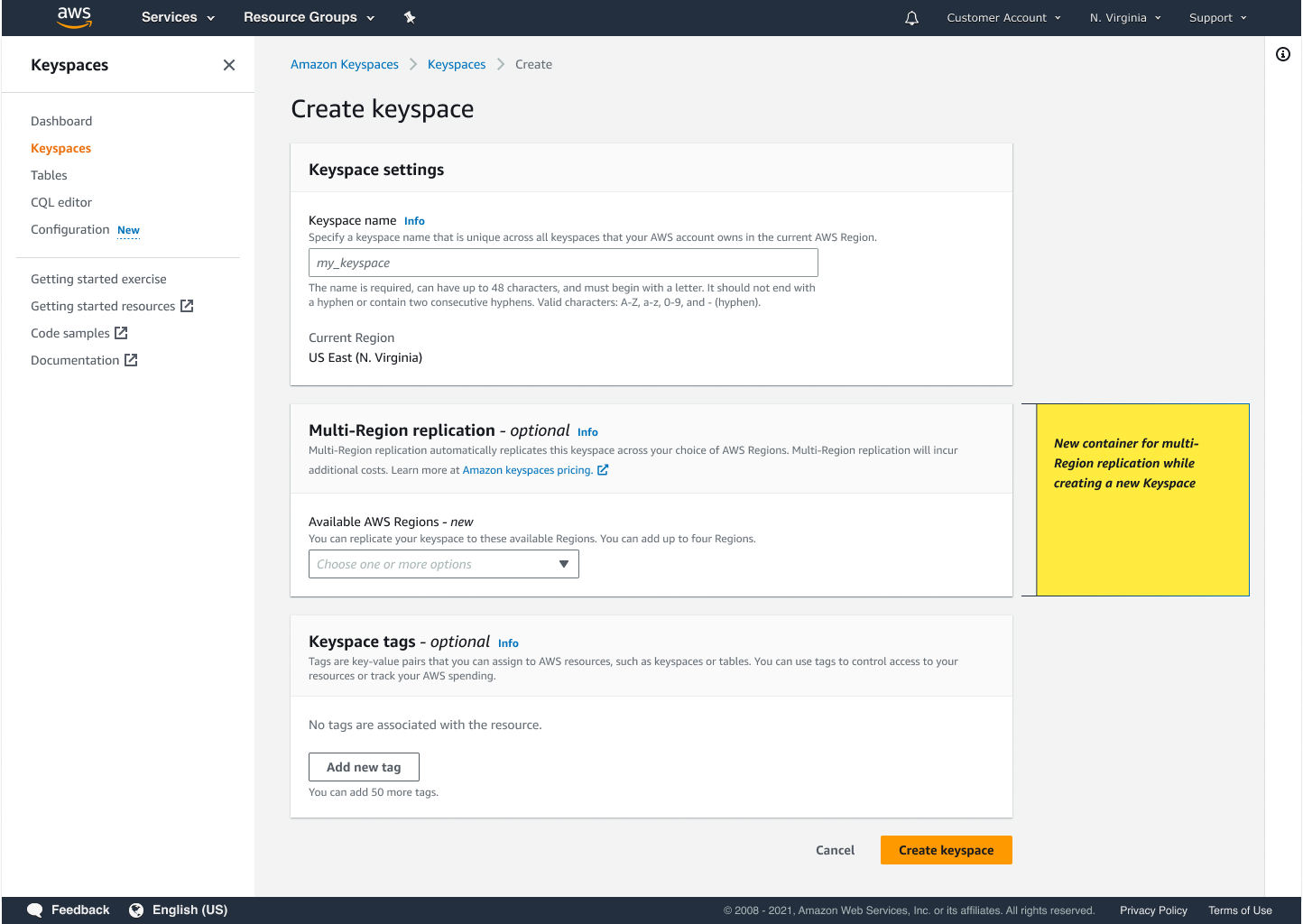
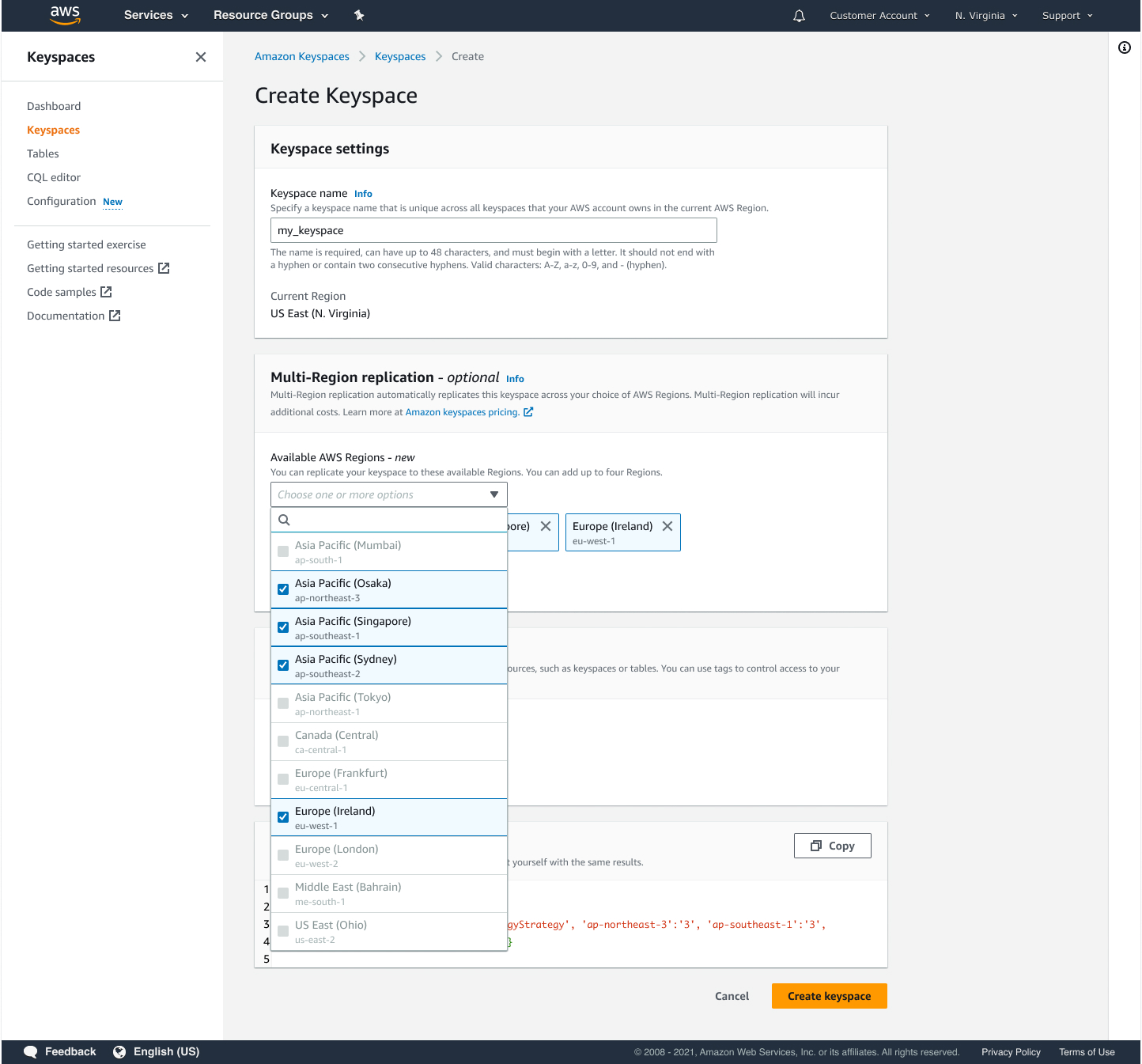
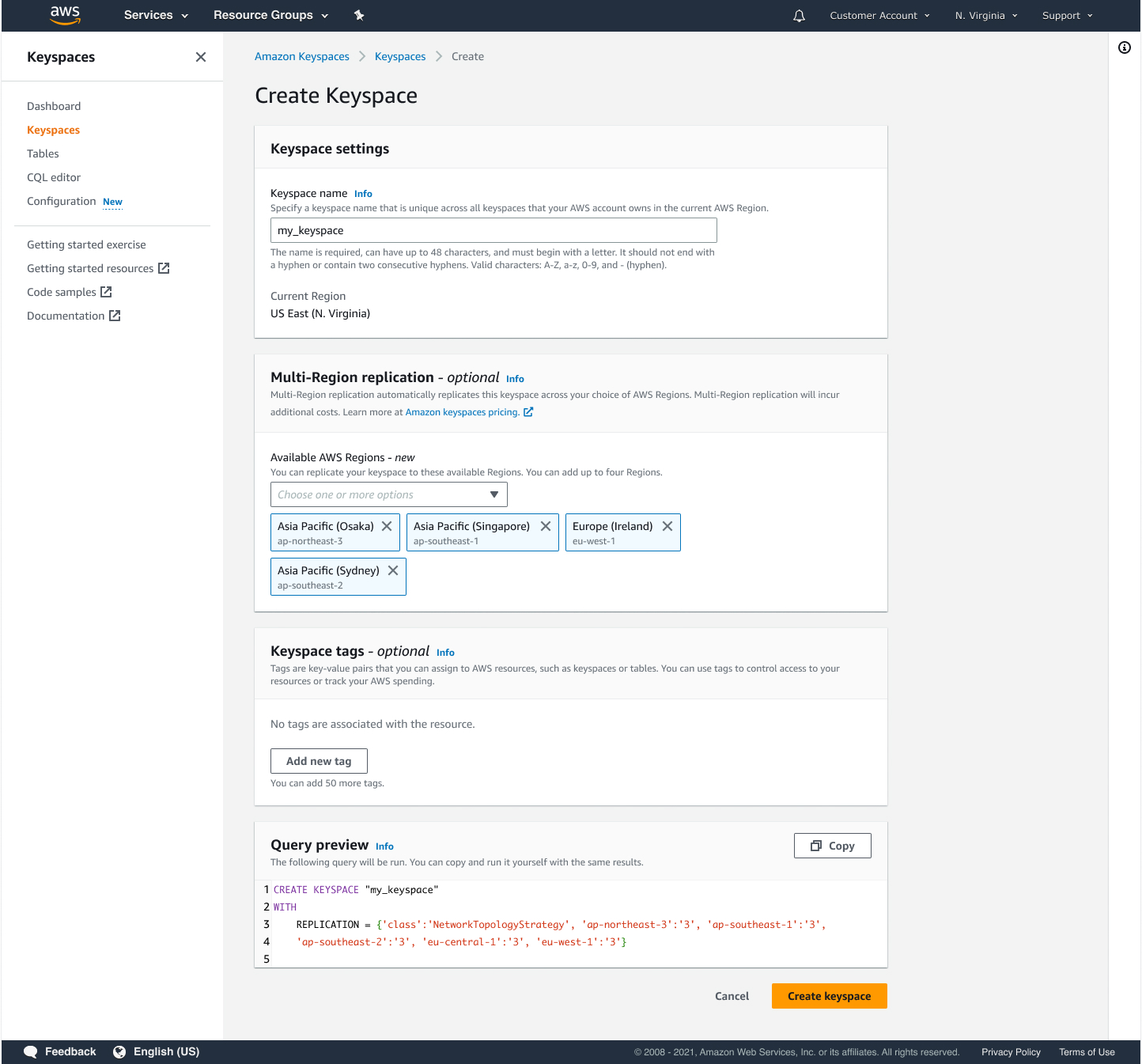
Phase 2: Management Features
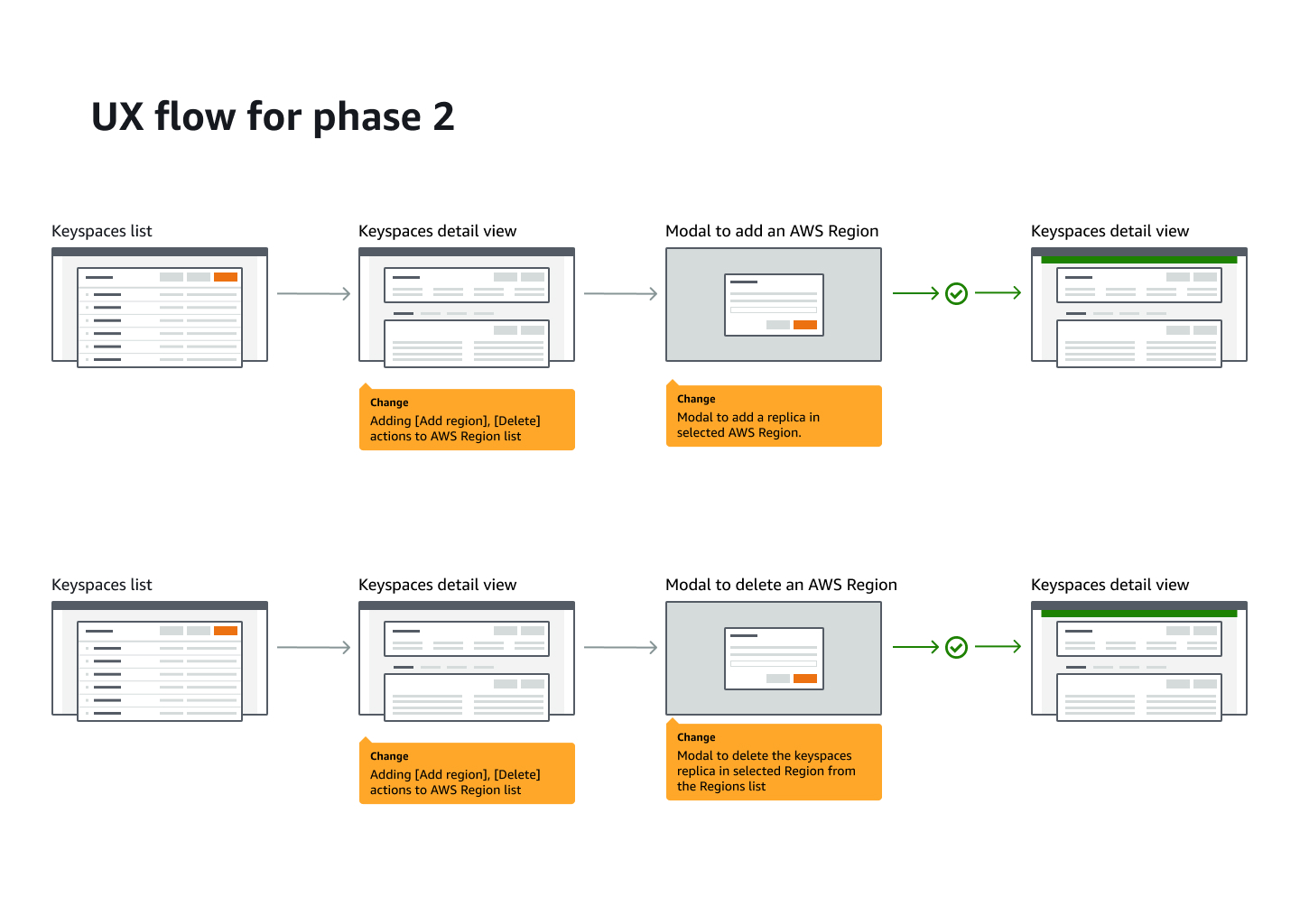
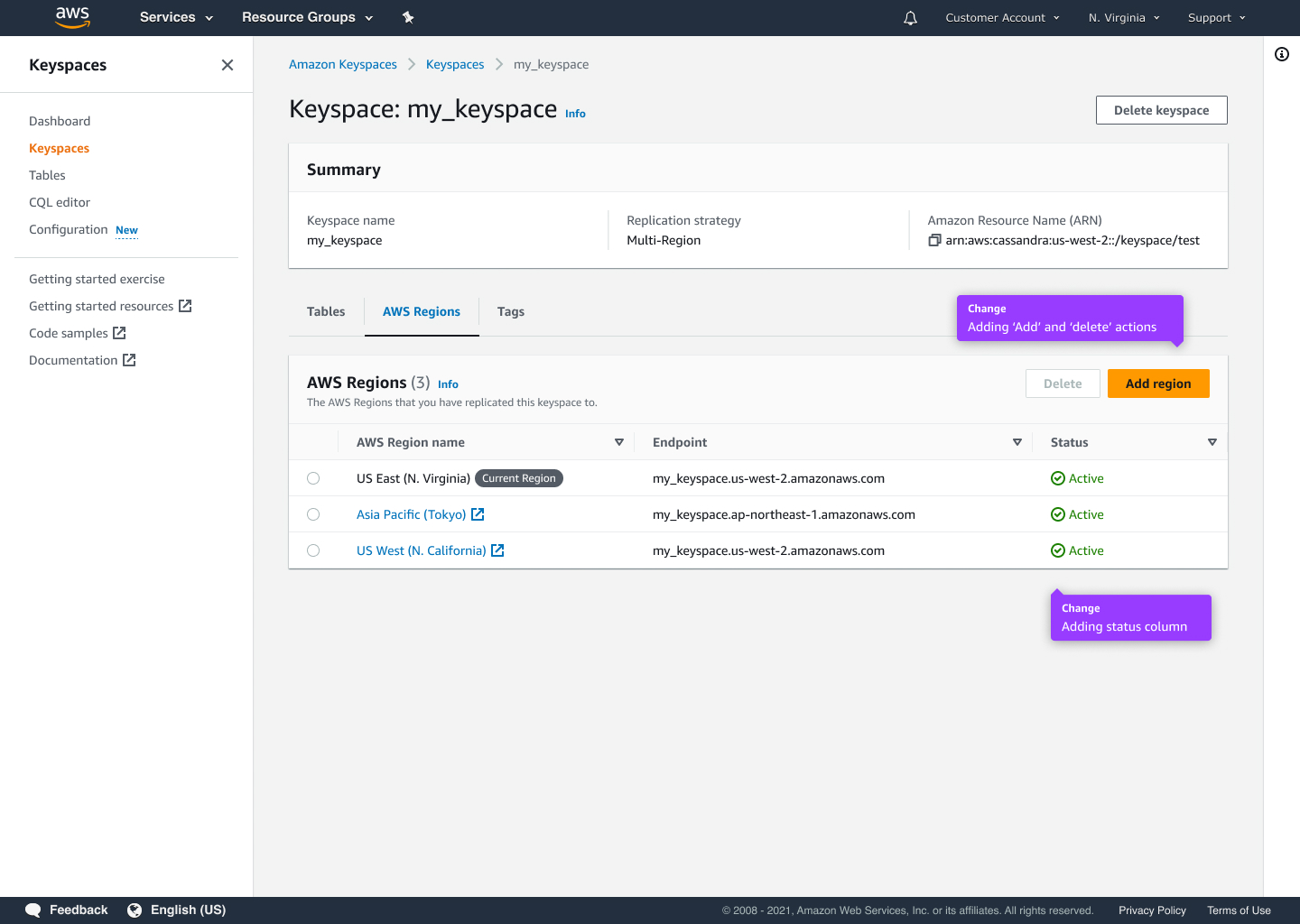
- Dynamic region management for existing keyspaces (add/remove)
- Region-specific configuration controls
- Enhanced monitoring with data synchronization tracking
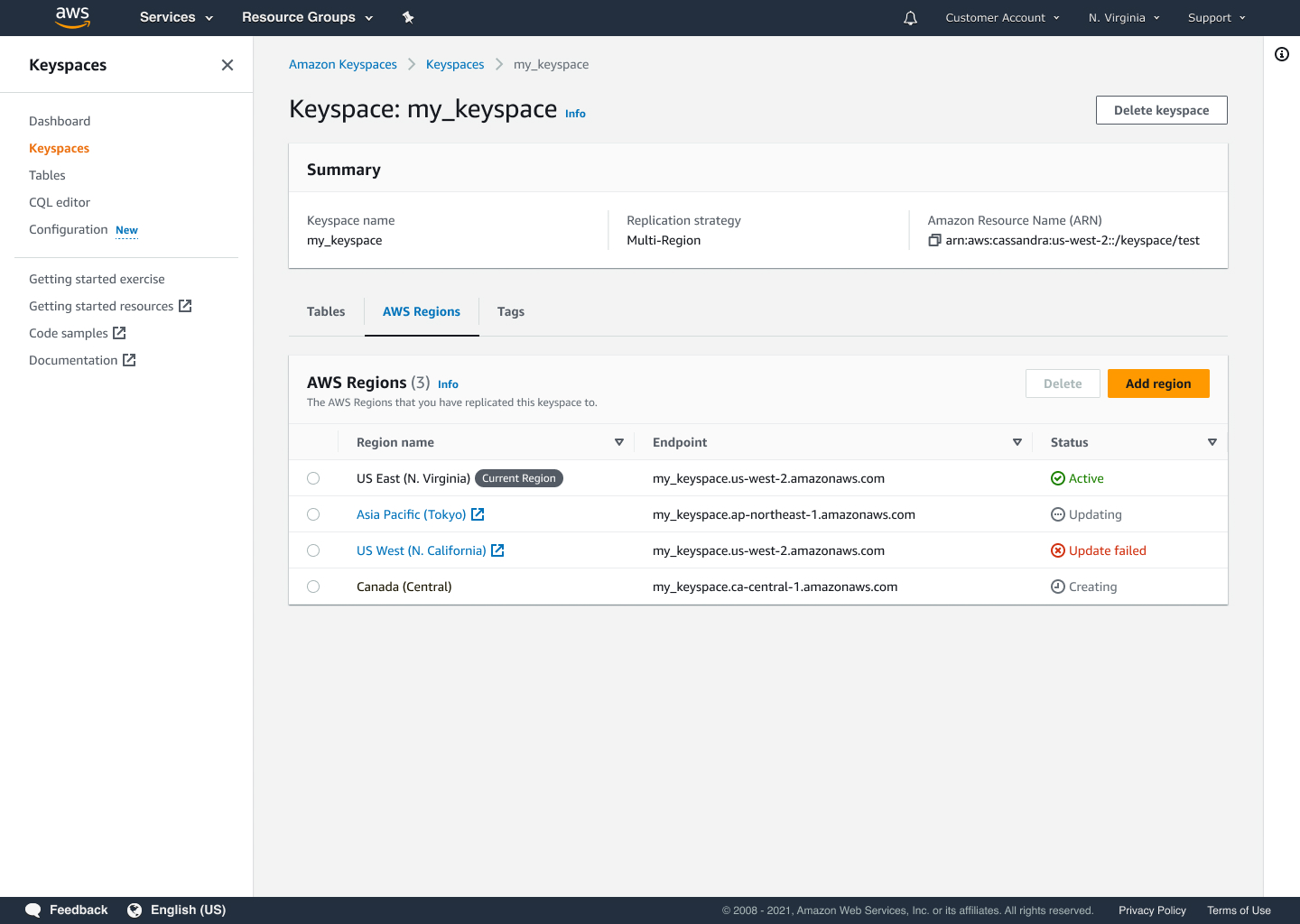
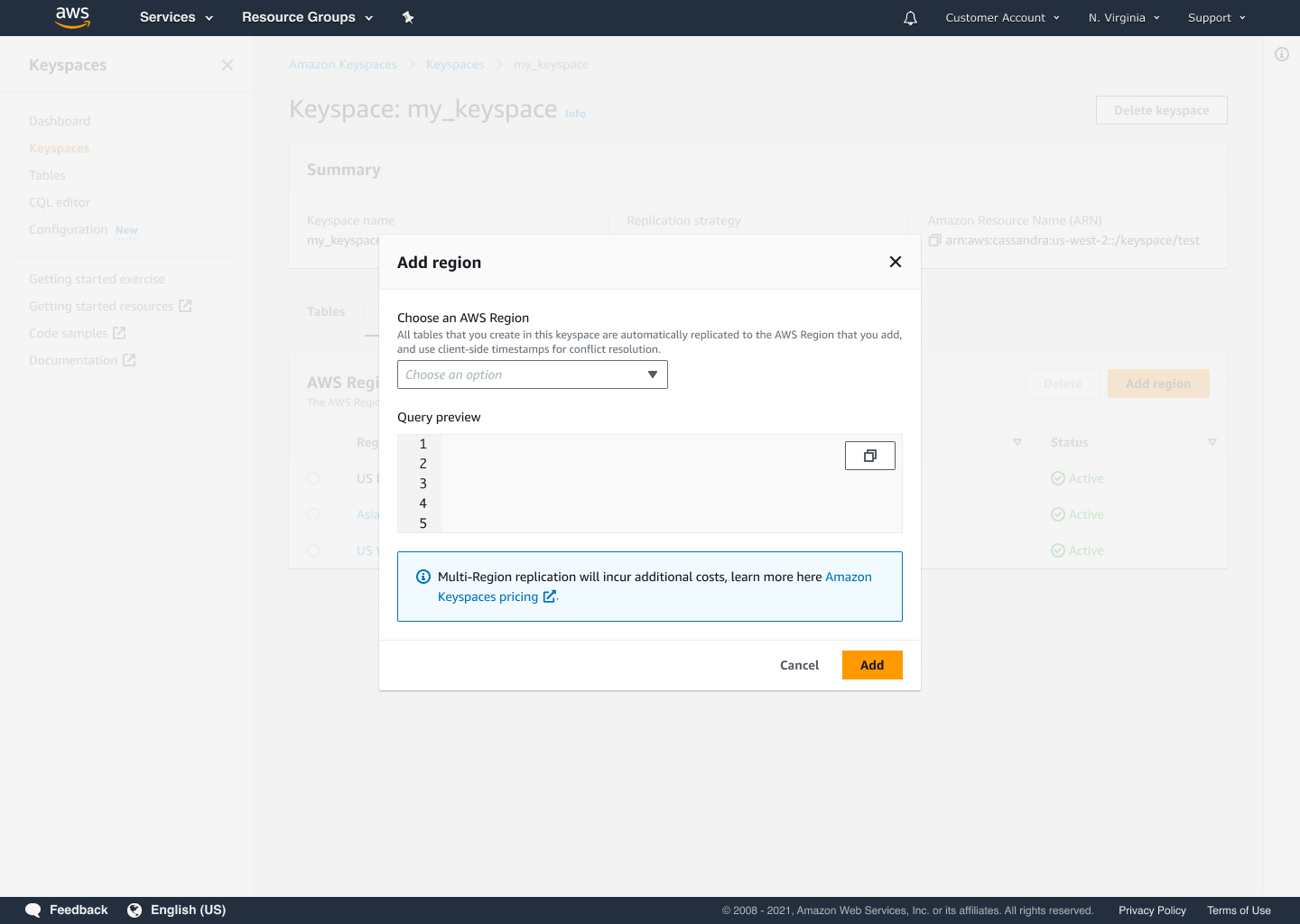
Challenges
1. Breaking Status Quo UX Patterns
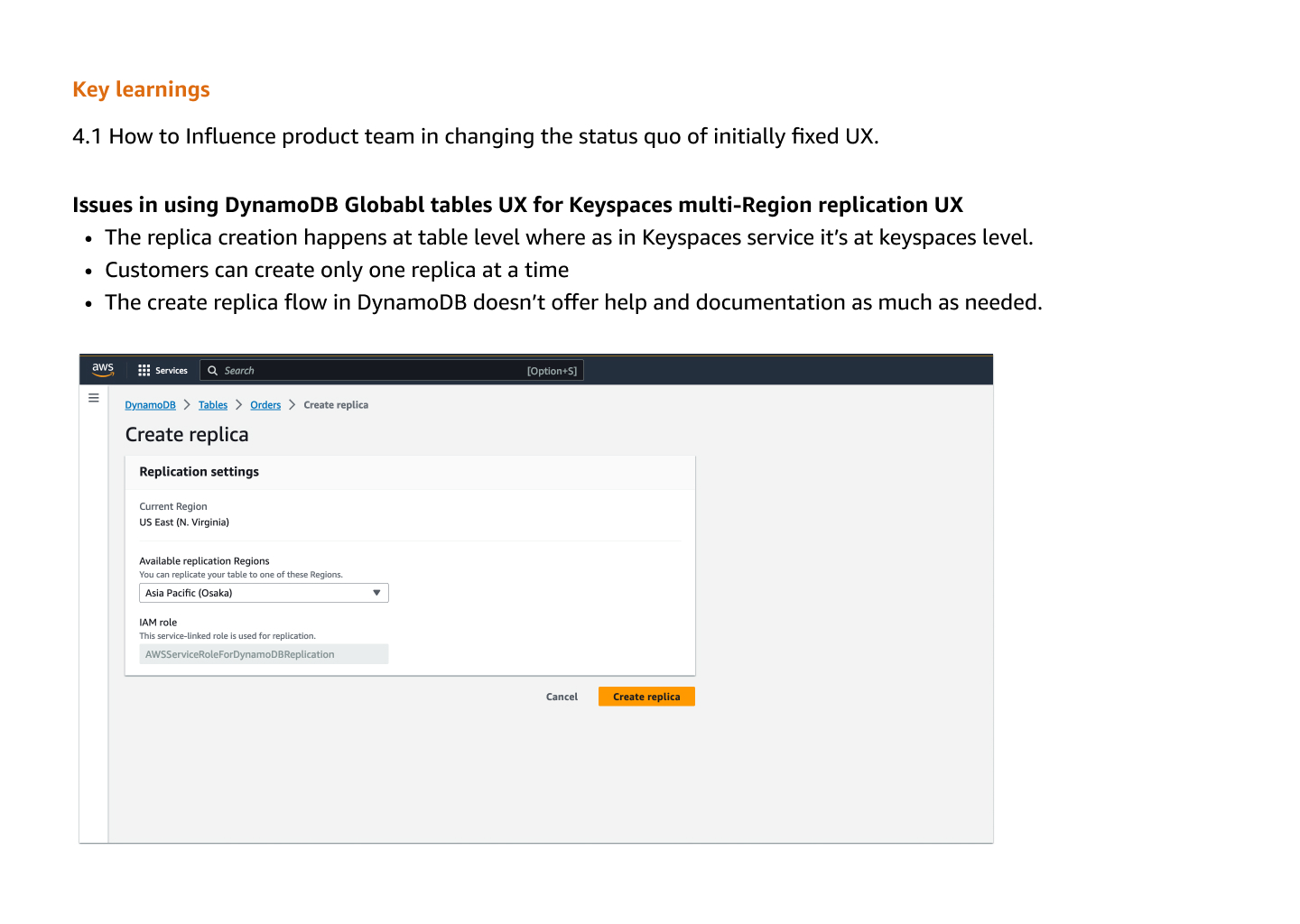
The initial proposal was to reuse DynamoDB's Global Tables UX pattern, but this presented several issues:
- Architectural Mismatch: DynamoDB handles replication at table level, while Keyspaces manages it at keyspace level
- UX Limitations: Global Tables only allowed single replica creation at a time, limiting bulk region setup
- Documentation Gaps: Insufficient help content and guidance in the creation flow
- User Mental Model: Different conceptual model between DynamoDB's table-level and Keyspace's database-level replication
Through user research and workflow analysis, we successfully advocated for a custom UX pattern that better matched Keyspaces' architecture and user needs.
2. Technical Integration Complexities
Working with the backend team on Phase 2 features revealed several challenges:
- API Limitations: Existing APIs weren't designed to provide region-level status information
- Service Architecture: Required significant backend changes to expose replication health metrics
- Cross-Team Coordination: Worked closely with backend team to modify API contracts for status monitoring
Impact
Phase 1 Launch Results
The launch of multi-region replication removed a major adoption blocker for Cassandra customers:
- Adoption: 12.5% of customers now use multi-region keyspaces
- Usage: Average of 45 multi-region keyspaces created monthly
- Migration: Enabled several large Cassandra customers to migrate to managed service
- Operational: Eliminated need for manual cross-region replication management